|
The
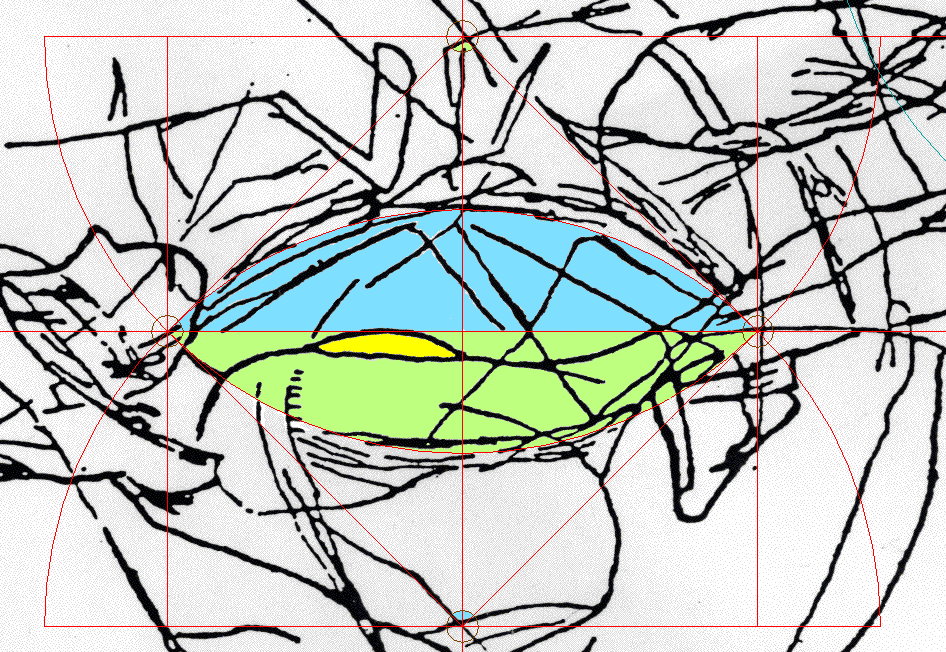
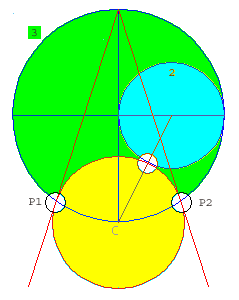
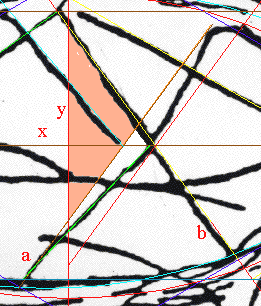
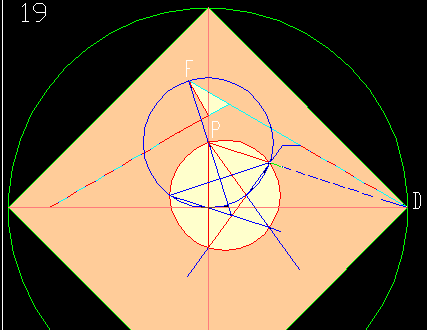
Cone comprizes the cross-section of the Great Pyramid
This observation contributes to a series showcasing direct connections
among the Giza pyramids, the engraving, and the monkey glyph.


The
two red triangles in the diagram are truly special:
1) Half the base of the smaller triangle has the exact value of minor
Phi-ratio (φ - 1) or
0.6180339887...
2) The ratio of each triangle side with half the base is the exact
φ - the Phi ratio.
3) The angle held by each side with the base is 51.82729237°,
which rounds out to 51°50'.
A quote from Petrie:"On the whole, we probably cannot do better than
take 51°50' ± 2' as the nearest approximation to the
mean angle of the
Pyramid.."
Our result of 51°50' complies to the ± limit
set by Petrie.
Therefore, the Cone as described by unit circles presents the
cross-section of the Great Pyramid and
does it twice for good measure.
the π curiosity
If we double the base of the top triangle to eight-times φ
- 1, the triangle height will be 3.14(460).
This direct statement of a close Pi approximation on
a model
of the Great Pyramid's cross-section is certainly noteworthy, because
Pi is frequently discussed in studies and polemics
regarding
this pyramid.
A
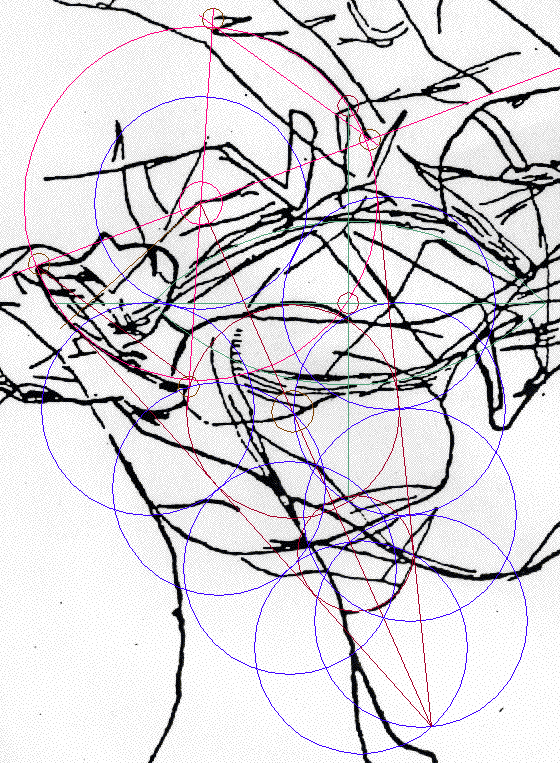
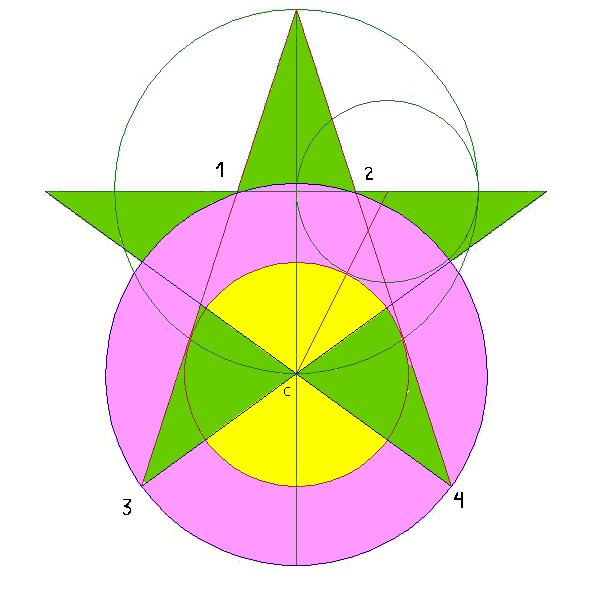
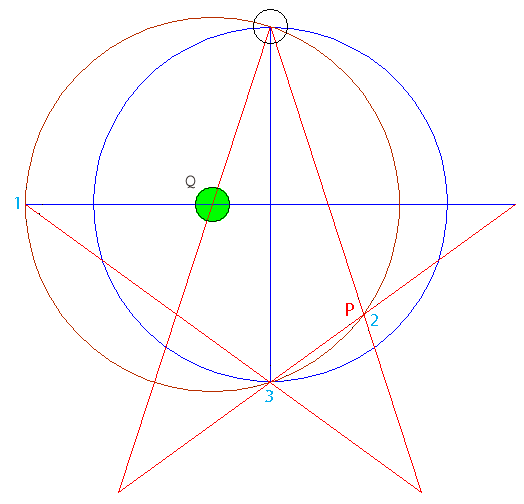
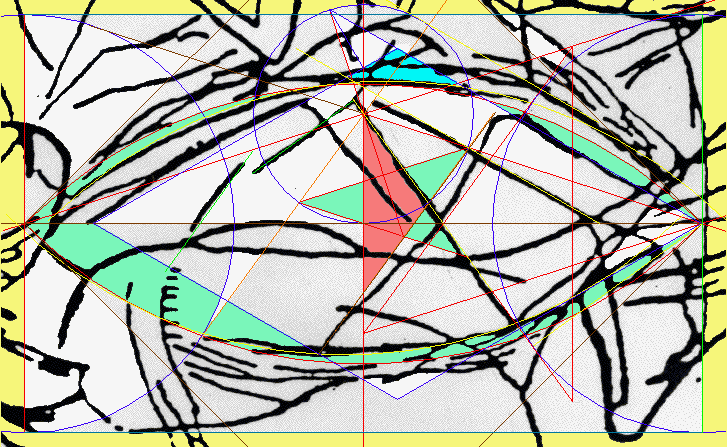
telling line arrangement at the Square's bottom corner
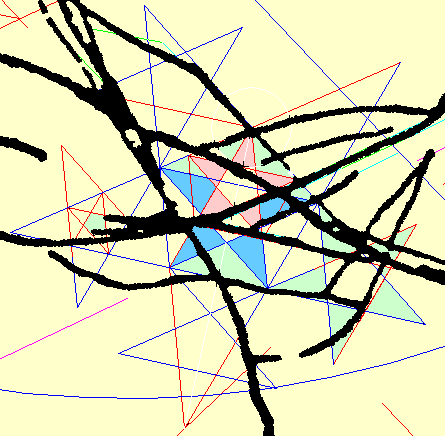
Extending from the Mother-star's center
downwards through and past the bottom corner of the Square, the engraved line runs
perfectly parallel to the left side of the Cone. Other lines in the
area also duplicate the Mother-star's angles. All the lines together
then create the 5-pointed star pattern we see in the diagram above.
Although more research is needed to determine this pattern's function
in the overall clockwork, it definitely serves here as reassurance that
the Mother-star's existence is no pipe-dream.
Getting
Over Early Issues
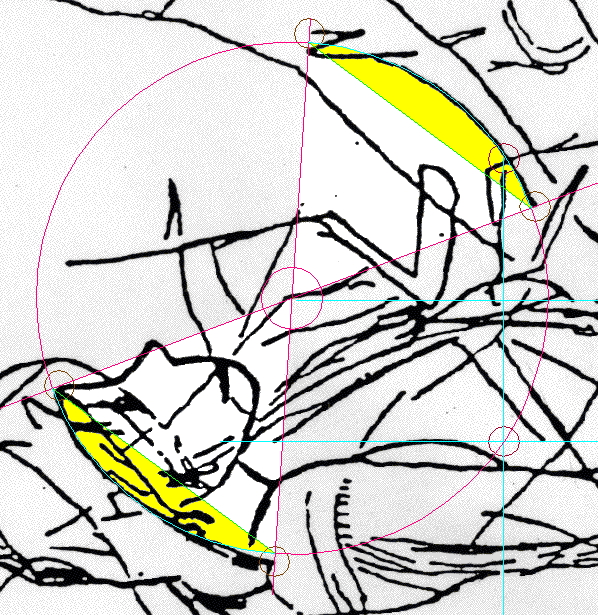
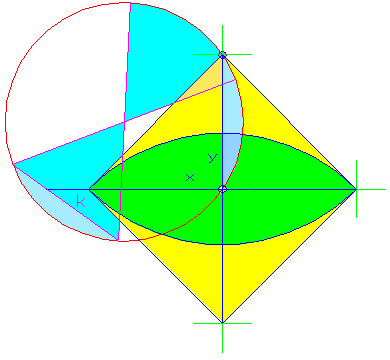
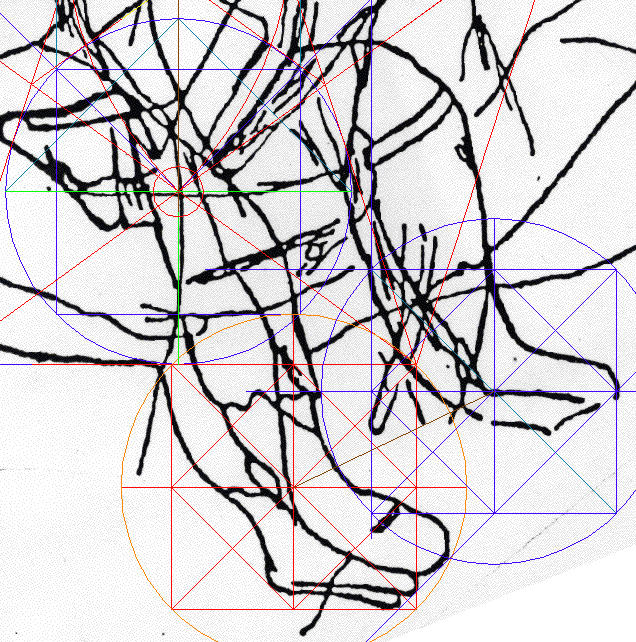
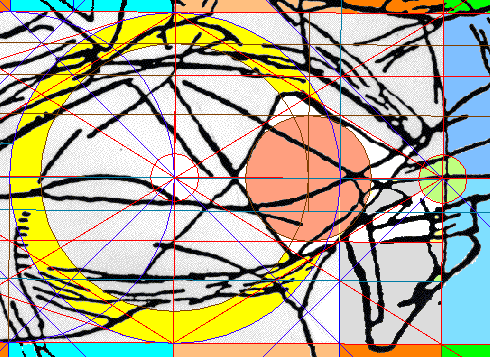
Readers will recall that the Cone & Square position as given by the
engraving suffers from one obvious, though mild, inaccuracy. Namely,
the K-circle is not exactly as it should be in relation to the Square's
center and upper corner. Its latitude above the x-axis is correct but
its longitude is off a little to the west.
My hypothesis that the engraving and the advanced craft pictured
therein (the Abydos Helicopter Effect) were
the work of the same agency was therefore under doubt.
There are no inaccuracies on currency bills printed by nations sending
craft into space. By the same token, if the engraving were like a
counterfait bill, an imperfect copy of the real thing, then its
potential value,
and of all the other engravings from the site, would be seriously
damaged.
Accurate
Inaccuracies
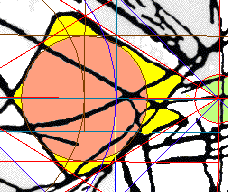
The inaccuracy of the Cone is accurately reflected by the Hip-lens as
the centers of the Cone's K-circle, the Square and the Hip-lens remain
on a straight line. This may suggest that the perceived inaccuracy may
simply be a manifestion of motion, in which the K-circle with the
Hip-lens pivot around the Square's center .
As well, some other parts of the design were apparently created from
the Square and remained accurate with
respect to it. Consequently, I formed an optimistic hypothesis that
since the
Square took
over from the Cone in geometrical creation, it allowed the Cone itself
undergo changes, because the original Cone (Mother-star) could
always be recreated from the perfectly precise Square.
The Frame factor
Having the image blown up at nearby printers to twice lifesize made its
exploration limited to manual tools much easier. The
step had an unexpected consequence - it brought its units of length to
parity with the metric system. Onwards, anything I measured by my
metric ruler in millimeters yielded values intended by the designers.
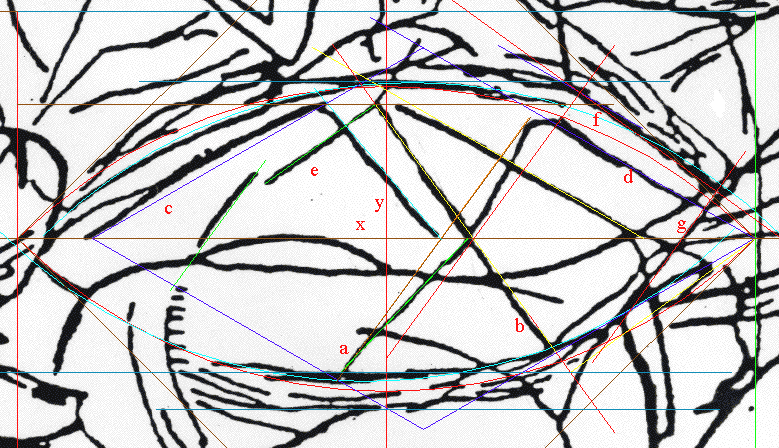
About the simplest way of
checking our image for signs of planning must be a look at its outer
limits, as its main peripheral points are easy to see. These thirteen
points
are then connected by lines and the distances between them are measured
and rounded to the nearest millimeter.
The result is the
'Frame'.
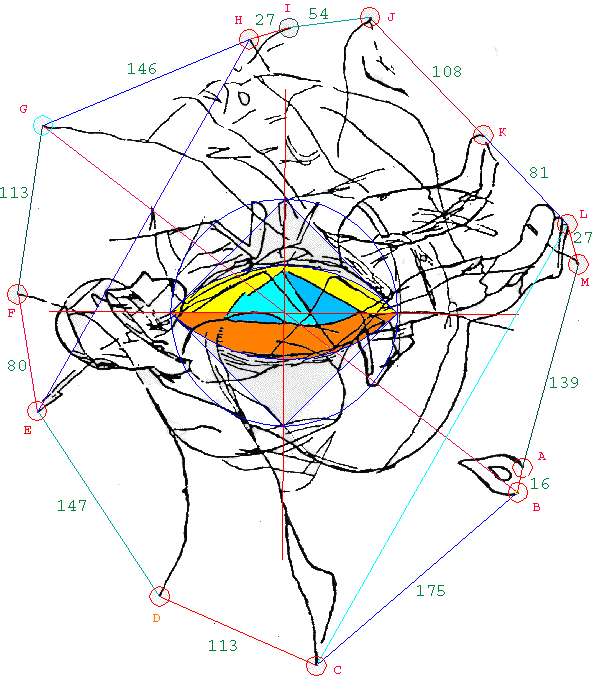
At the first glance, the
thirteen whole numbers ranging from 16 to
175 are no big deal. But then one starts
learning that these numbers, and their
special arrangement, are simply ideal for the purpose of quoting Pi, Phi,
and rates of Equinoctial
Precession over and over, and as far as twenty-eight decimalse for Pi,
ten decimals for Phi, plus, quoting rates for the
equinoctial precession matching today's
state-of-art.
The Frame looms as a stand-alone proof in the
engraving's large portfolio of evidence proving advanced
scientific level of its creators.
I firmly believe that no
other set
of thirteen whole
numbers in a comparable range can rival the Frame
at this type
of
communication. Promptly, I had
issued a challenge to would-be skeptics to match the Frame with a
similar creation of their own. And what do you know, by now, the
gauntlet remains untouched in the middle of the arena for over thirty
years..
To be fair, I even allowed the competition the use of a computer, as is
evident from the below excerpts from the challenge:
Using a supercomputer, create and run a program following the below
stated rules, with the same goal in mind.
Text omitted
My prediction is that in the end it will duplicate the "Frame" -
the set of values from our engraving.
Text omitted
If
the Frame's functions cannot be improved by rearranging
and replacing some, or even all of its
thirteen numbers, then the Frame must be the best solution in its
category among the septillions, or so, of competing
combinations possible.
When
facing the reality
of not being able to outdo the alleged blind
chance, "skeptics" hide their heads in sandheaps, their last line of
defence. Yes, I wax sarcastic,
but such reaction is fully justifiable as a deserving and
realistic portrayal of the deaf and dumb opposition.
|